
NEXT GENERATION DELIVERY VEHICLE
Service Manuals
PERFORM LIKE NO OTHER
SERVICE MANUALS OVERVIEW
TECHNICAL MANUALS
Explore our comprehensive guides for servicing the Next Generation Delivery Vehicle (NGDV). This detailed documentation includes diagnostic troubleshooting tips and complete instructions for removal, repair, installation, and maintenance of the vehicle. Equip yourself with all the necessary information to keep your NGDV running smoothly.
Operator MANUALS
View our informative booklet that details the systems, features, and controls of the Next Generation Delivery Vehicle. This guide provides a thorough overview to help you understand and utilize all aspects of your NGDV effectively.
EMERGENCY RESPONSE GUIDE
Access our specialized guide for first responders, offering a detailed structural breakdown of the NGDV. This resource is designed to help emergency personnel navigate the vehicle safely and efficiently during critical situations.

DOCUMENTS AND MANUALS
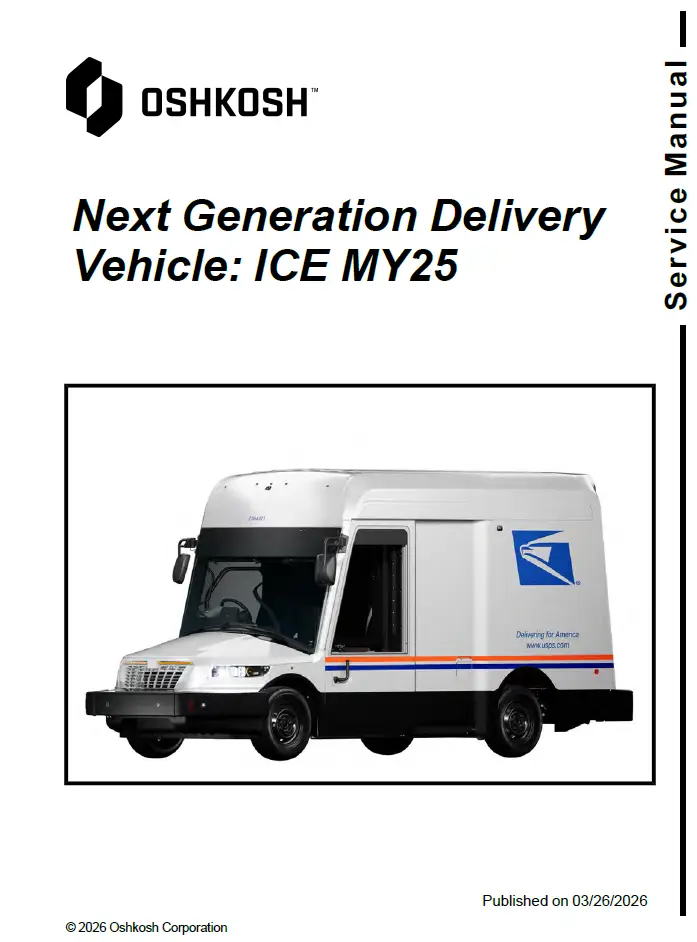
- Published:
This manual describes and directs repair procedures specified for the ICE vehicle. Critical health and safety precautions are included. Anyone who deviates from these instructions risks compromising personal safety or vehicle integrity.
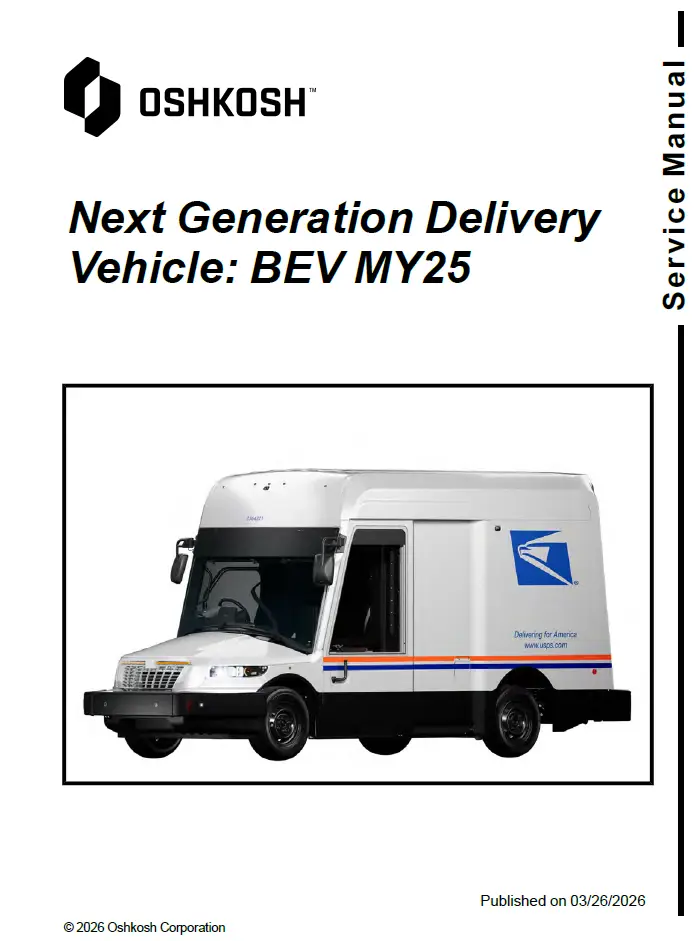
- Published:
This manual describes and directs repair procedures specified for the BEV vehicle. Critical health and safety precautions are included. Anyone who deviates from these instructions risks compromising personal safety or vehicle integrity.
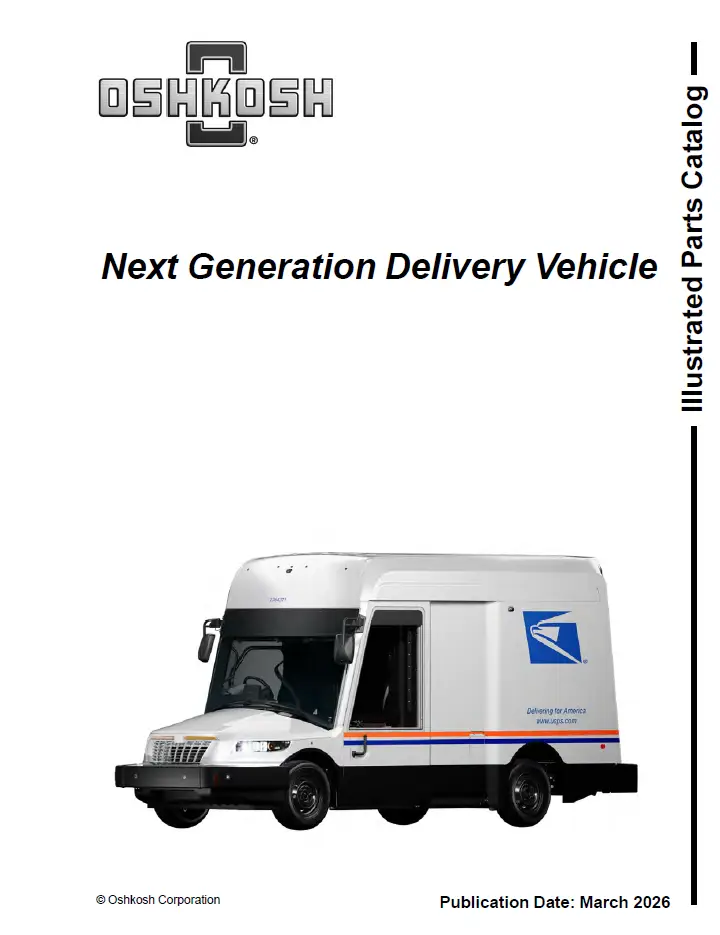
- Published:
This parts catalog lists and illustrates the parts used on your Oshkosh vehicle, along with part numbers and required quantities.
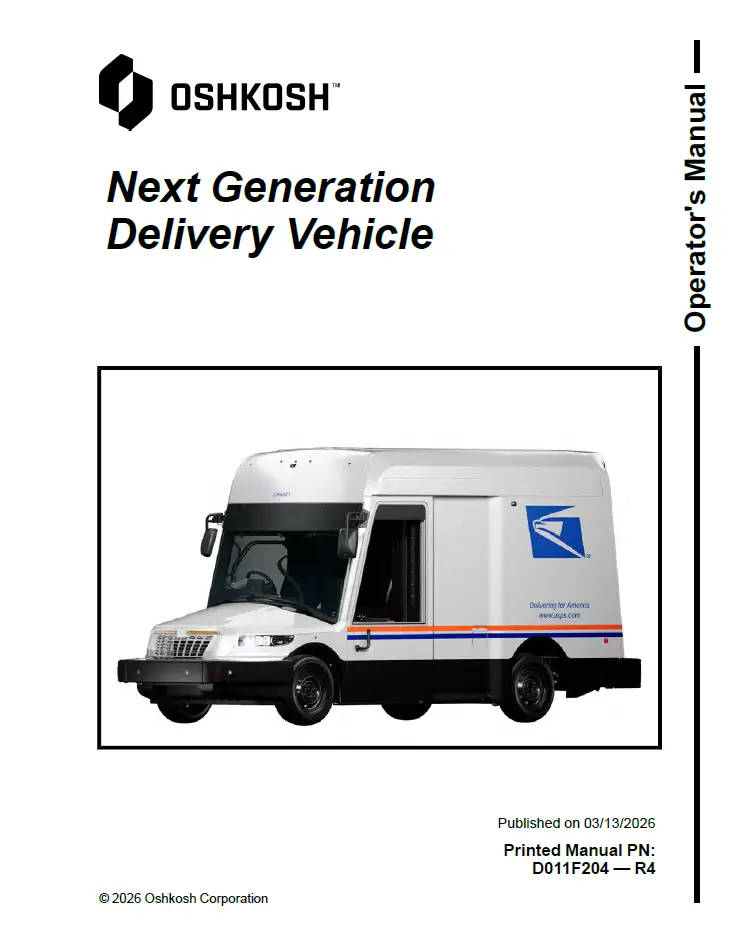
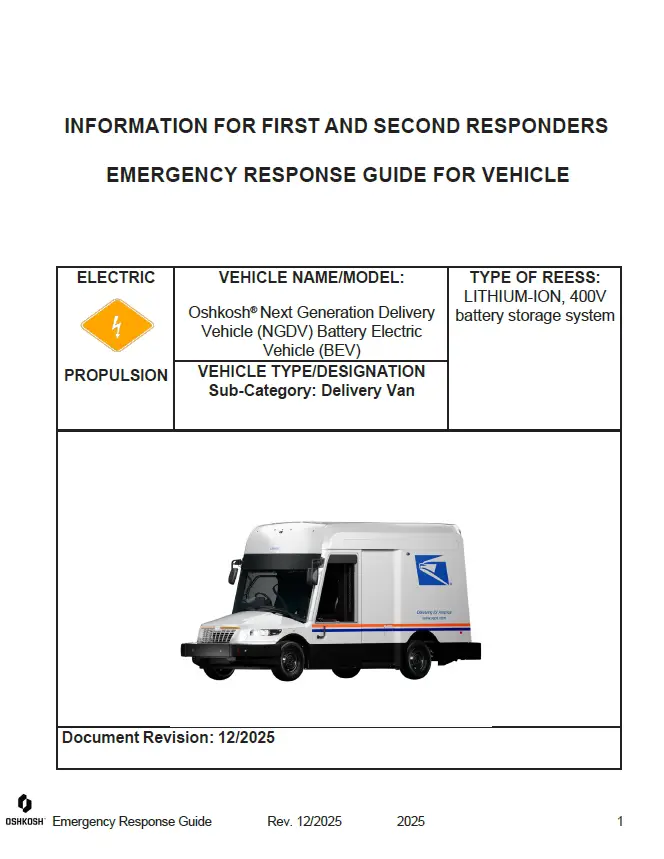
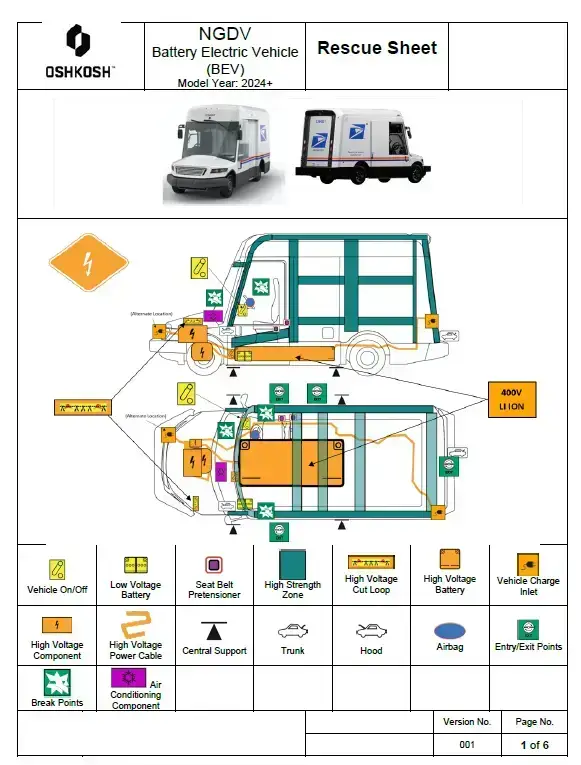
- Published:
Access our specialized guide for first responders, offering a detailed structural breakdown of the vehicle. This resource is designed to help emergency personnel navigate the vehicle safely and efficiently during critical situations.
Customer Notifications
Number: NGDVTB015
A new version of the Oshkosh Diagnostic tool, 2.6.0, will be released on Wednesday, April 8, 2026. This will contain new and modified functionality. This bulletin is to make users aware of these changes and new functionality.
Number: NGDVTB014
Due to an incorrect installation process, some NGDV have an improper routing of the wire that is part of the seat belt buckle assembly.
Number: NGDVTB013
Wheel speed sensor faults may cause damage to the Rear Drive Unit if the vehicle is operated for an extended period of time in a faulted condition.
Number: NGDVTB012
The NGDV controller network to “wake-up” under certain conditions when not in use (Ignition OFF). These wake events draw power from the 12V battery. If the 12V battery is discharged too much by repeated wakeups the NGDV vehicle may be unable to start.
Number: NGDVTB0011
NGDVs may exhibit an engine misfire condition with diagnostic trouble codes (DTC) P0301, P0302, P0303 and/or P0304 set in the powertrain control module (PCM), resulting in melted or damaged spark plugs and possible cylinder wall damage.
Number: NGDVTB0010
For MY2026 NGDVs, Oshkosh Diagnostic Tool (OKDT) Module Software Status Report displays that there are software updates available for the following modules:
- Corner Radar – Right Rear
- Corner Radar – Left Rear
- Front Radar
Number: NGDVTB0009
Safety and Warning labels in the cab are peeling. A change to remove the texture on the panels, where these labels adhere, will be made in mid-2026, so this is a permanent fix option until that time.
Number: NGDVTB0008
BEV vehicles may exhibit an occasional no-start condition due to a BMS module communication/initialization issue. If this condition is present the vehicle will fail to activate the high voltage system when the start button is pressed.
Number: NGDVTB006
A new version of the Oshkosh Diagnostic tool, 2.5.0, will be released on Thursday, November 13,, 2025. This will contain new and modified functionality. This bulletin is to make users aware of these changes and new functionality.
Number: NGDVTB0005
Procedures for how to operate the Head Unit and how to troubleshoot common issues.
Number: NGDVTB0004
There are several air and dust access points on the vehicle that contribute to excessive airborne dust in the cabin while operating the vehicle. These changes are intended to mitigate dust ingress to the greatest extent possible while design changes to the NGDV are implemented to offer are more permanent and automatic solution.
Tape was not fully sealed and connected to the unibody due to excess tape application, causing it to be easily peeled away, allowing dust and water to potentially bypass into the vehicle.